Is Your Email Design Ghosting Your Customers?
While obsessing over metrics, brands often alienate loyal fans with inaccessible emails. Failing to support screen readers or contrast modes says clearly: this wasn’t built for you.
- Strategy
- Creative
- CRM

Published on 01/13/2026
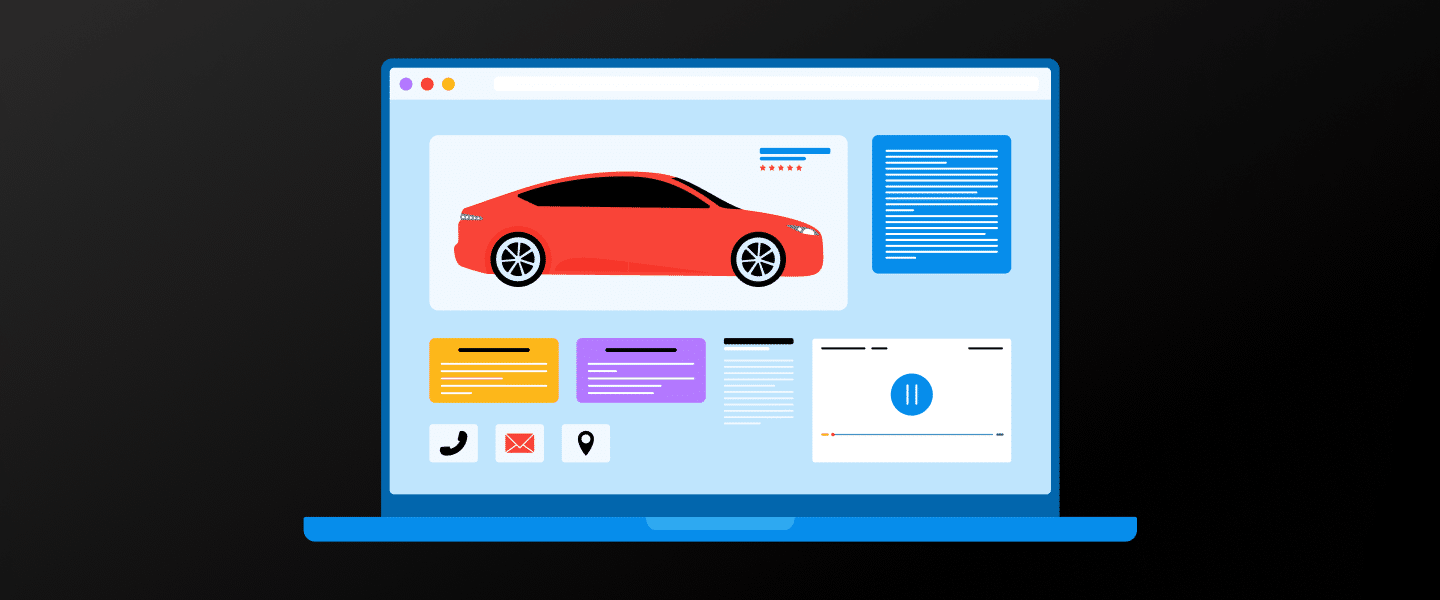
For decades, the auto industry believed that purchasing a vehicle was too complex, too expensive, and too emotional to be reduced to a simple online transaction. Customers needed the handshake, the test drive, and, inevitably, the friction of the negotiation table.
The tide has turned. The recent partnership between Hertz and Amazon, allowing customers to browse, finance, and purchase a vehicle directly through the retail giant’s platform, is not just another press release. It is a fundamental shift in consumer expectation, showing that you can’t separate building the brand from selling the car.
For dealerships and auto marketers, this news might have faded into the background as white noise. But if you look closely, it’s the loudest signal we’ve heard in years, suggesting that the friction we have accepted as part of the business might be the very thing holding it back.
The Amazonification of the auto industry isn’t coming: it’s here. Don’t delay on auditing your own buying process to avoid falling behind.
There is an old school idea that because a car is a $35,000 purchase, the customer needs a long, drawn-out process with a salesperson. We understandably treat a car differently than we treat a toaster, a vacuum, or a bulk order of paper towels.
The reality is that the modern consumer’s brain has been rewired. The friction in the traditional car-buying relationship doesn’t add value to the dealership, and it certainly doesn’t add value to the customer. It’s just that – friction.
Amazon has effectively turned a major life purchase into a typical online transaction. By allowing a customer to “Add to Cart,” they have removed the psychological barrier that separates a high-consideration purchase from an impulse buy.
You might look at the current landscape and say, “Well, people still go to dealerships.” That’s true. Disruption in automotive is often a slow burn. Hyundai and other manufacturers have dipped their toes into digital retail before. But the Hertz-Amazon deal expedites the timeline.
We have seen the Carvanas of the world normalize the idea of buying a car sight unseen. Now, Amazon is leveraging that familiarity. They are betting that if they remove the hassle, consumers will care less about the traditional “kick the tires” ritual and more about the ease of delivery.
Why does this partnership work? It comes down to one word: Credibility.
Let’s be honest about the industry we work in. Consumers trust Amazon blindly. They know if they order a package on Thursday, it arrives on Friday. If there is a problem, it gets fixed. Amazon has spent decades building a bulletproof reputation for logistics and customer service.
Conversely, customers are wary of a used car lot, and overcoming that skepticism is expensive.
We can think of the car buying journey like online dating. The Profile is your OEM’s national marketing. It’s the sleek, high-production TV spot for Mercedes or BMW that makes you fall in love. It gets the customer to swipe right. Then, it’s time for the First Date – the dealership experience. Here’s the challenge, just because the Profile was perfect, doesn’t guarantee a great date. Sometimes they’re rude, assume you’ll pay for everything, and aren’t willing to play nice.
The result? No second date. No deal.
By partnering with Amazon, Hertz is effectively securing a “perfect date guarantee.” Amazon is lending its massive, positive brand equity to an industry that struggles with trust. They are telling the consumer, “You don’t have to worry about the dealer; you’re dealing with us.”
One of the biggest threats to traditional dealerships isn’t just price, but it’s the jarring disconnect in the marketing funnel.
As an agency, we see national brands spend millions on emotional, cinematic advertising to build a premium vibe. But once the customer clicks through to the local level, they are often chased around the internet by low-quality, urgent sales ads. You know the type: “Bad Credit? No Problem!” flashed in neon colors. This mixed message destroys brand equity. The customer is drawn in by luxury and greeted by desperation.
Amazon doesn’t have this disconnect. When you buy a Hertz car on Amazon, the experience feels like Amazon from the first click to the final checkout. It is clean, consistent, and user-friendly.
This is the new bar. You are no longer just competing with the dealership down the street; you are competing with the seamless user experience (UX) of the world’s largest retailer.
While everyone is focused on the sale of the metal, the real danger of the Amazon model lies in what happens after the purchase. We know that for most dealers, profit margins on new car sales are incredibly tight. The real lifeline of the business is the service bay: tires, oil changes, wipers, and ongoing maintenance.
If a customer buys a Ford Explorer through Amazon, Amazon now owns that customer relationship. They know exactly when you bought the car, so their algorithms will likely predict when you need new wiper blades or tires and serve you an ad or a direct offer before the dealer even thinks to send a generic reminder email.
Traditional dealer follow-up is notoriously inconsistent. You might get a “Thank You” email immediately, but then communication drops off for months. Amazon is relentless and precise. If dealerships lose the car sale to Amazon, they aren’t just losing the front-end gross. They risk losing the customer for life because Amazon is better at predicting what that human needs next.
So, does this mean every dealership needs to start selling on Amazon tomorrow? No. Nor does it mean keeping with the traditional model means you are doing it wrong. However, it does mean you need to stop viewing your website as a brochure and start viewing it as a transaction engine.
If you are a Dealer Principal or a CMO, we have a challenge for you. Don’t ask your agency for a better TV ad or a viral social media post. Instead, take out your phone.
That number is your friction score. If you are annoyed, your customer is furious.
Your goal for the next quarter shouldn’t be “more leads.” It should be “fewer clicks.” If you can take your current process and cut the time in half, you are taking a step toward the Amazon standard.
The Hertz and Amazon deal isn’t just about selling rental cars. It is a proof of concept that the car buying journey has officially been “Added to Cart.”
Most dealerships can’t replicate Amazon’s infrastructure, but they can replicate their obsession with ease. If your marketing draws people in, but your process drives them away, you are spending money to fill a leaking bucket.
The disruption is here. You can either build a buying experience that respects the customer’s time, or you can watch them click over to someone who does.
Ready to remove the friction from your auto marketing? Reach out to newbiz@mythic.us.